After our first backpacking season, my daughter—who is the most experienced among us and our overall leader—cleaned our water filters, packed them away, and didn’t think about them until the following summer.
The next year, neither filter worked properly. We later realized that we had not followed the manufacturer’s long-term storage instructions.
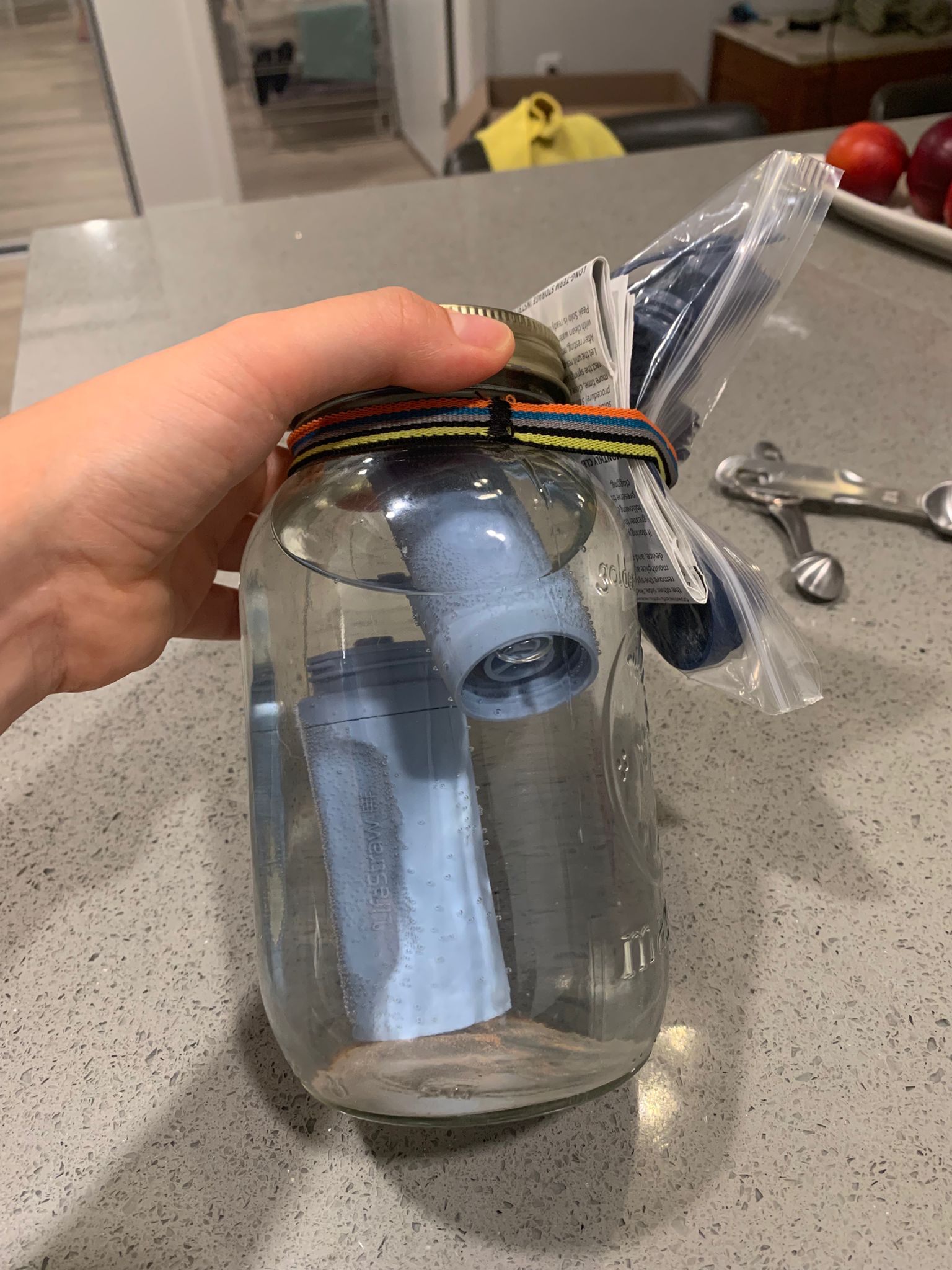
It is easy to assume that similar backpacking water filters have the same storage requirements because many use hollow fiber membranes. However, this is not the case. Different manufacturers recommend different storage methods, and using the wrong one can reduce the filter’s performance or permanently damage it.
Important correction: Sawyer filters should be cleaned, sanitized, allowed to dry, and stored dry. Saline storage applies to LifeStraw Peak filters, not Sawyer filters.
Why Storage Instructions Differ
Although many backpacking water filters use hollow fiber membrane technology, manufacturers do not recommend the same storage procedure. The correct method depends on the design and materials of the specific filter.
| Filter type | Long-term storage method | Main risk |
|---|---|---|
| Sawyer filters | Clean, sanitize, air dry, and store dry in a cool location. | Freezing after use; storing without cleaning or sanitizing. |
| LifeStraw Peak filters | Do not allow the membrane to dry out completely after use. Use the manufacturer’s saline storage method for long-term storage. | Drying out completely; reduced flow rate; mold or algae growth if stored incorrectly. |
Because these recommendations are different, it is important to follow the instructions provided for your specific filter rather than assuming that all hollow fiber filters are maintained the same way.
How to Store a Sawyer Water Filter
For Sawyer filters, the recommended long-term storage process is based on cleaning, sanitizing, drying, and protecting the filter from freezing after it has been used.
Backflush
Backflush the filter to remove accumulated sediment and debris.
Sanitize
Use a diluted unscented bleach solution according to Sawyer’s instructions.
Dry
Allow the filter to air dry before long-term storage.
Store Dry
Store the filter in a cool, dry location above freezing.
Freezing is particularly important. If water remains inside the hollow fibers and freezes, the fibers may crack. The damage is usually invisible, but the filter may no longer safely remove bacteria and protozoa.
How to Store a LifeStraw Peak Filter
LifeStraw provides different guidance for its Peak Series filters. After cleaning, the manufacturer recommends storing the filter with a food-grade saline solution for long-term storage. Keeping the membrane hydrated helps maintain flow performance and reduces the likelihood of mold or algae growth while the filter is not in use.
This storage method applies to LifeStraw Peak filters and should not be used as a general procedure for all backpacking water filters.
Practical rule: Sawyer storage and LifeStraw Peak storage should not be treated as interchangeable. Sawyer filters are stored dry. LifeStraw Peak filters use saline storage.
What Happens if a Water Filter Freezes?
Freezing is one of the most important risks for used hollow fiber water filters. After a filter has been used, water can remain inside the fibers even if the outside appears dry. When that water freezes, it expands and can damage the membrane.
The problem is that freeze damage is usually invisible. A filter may continue to pass water, but it may no longer remove bacteria and protozoa reliably. For this reason, a used hollow fiber filter should not be stored in an unheated garage, shed, vehicle, balcony, or anywhere else that may freeze.
Where Not to Store a Used Backpacking Water Filter
Do not store a used hollow fiber water filter in places where it may freeze or overheat.
- Unheated garage
- Shed
- Vehicle
- Balcony
- Direct sunlight
- Very hot storage bins or attic spaces
A better option is an indoor storage area where the filter will remain above freezing for the entire winter.
Before Putting Your Backpacking Gear Away
Before storing your backpacking gear for the season:
- Identify the exact water filter model.
- Clean and flush the filter according to the manufacturer’s instructions.
- Use dry storage for Sawyer filters.
- Use saline storage only for LifeStraw Peak filters that require it.
- Keep all used hollow fiber filters away from freezing temperatures.
- Flush the filter before using it on the next backpacking trip.
The main lesson is simple: water filter storage is not universal. The wrong storage method can reduce flow rate, damage the filter, or make it unreliable for the next backpacking season.
FAQ
How should I store a Sawyer water filter between seasons?
Sawyer filters should be cleaned, sanitized according to Sawyer’s instructions, allowed to air dry, and stored dry in a cool location protected from freezing.
Should I store a Sawyer filter in saline solution?
No. Saline storage applies to LifeStraw Peak filters, not Sawyer filters. Sawyer filters should be stored dry after cleaning and sanitizing.
How should I store a LifeStraw Peak filter?
LifeStraw Peak filters should not be allowed to dry out completely after use. For long-term storage, LifeStraw recommends storing the filter with a saline solution.
Can a Sawyer water filter freeze?
Yes. Once used, a hollow fiber filter may retain water inside the fibers. If that water freezes, the fibers can crack and the filter may no longer remove bacteria and protozoa safely.
Can I store my water filter in the garage?
Only if the garage remains above freezing. In Canada, an unheated garage is usually not a safe place to store a used hollow fiber filter over winter.
How TrailReady Helps
TrailReady helps backpackers plan gear based on trip length, weather, destination, and conditions. Water treatment is part of that planning. A filter that worked last season may not be safe if it was stored incorrectly, frozen, or not flushed before use.
Before storing backpacking gear for the season, clean the water filter, confirm the exact model, and follow the manufacturer’s storage method.
References
- Sawyer. Water Filtration FAQs.
- Sawyer Europe. Frequently Asked Questions.
- Sawyer / SectionHiker. How to Clean, Sanitize, and Store a Water Filter in the Off Season.
- LifeStraw Help Center. How to Store Your LifeStraw Peak Series Straw.
- LifeStraw Help Center. Storage and Long-Term Care.
- TrailGroove. Hollow Fiber Backpacking Water Filter Care & Maintenance.
Plan your next backpacking trip with TrailReady.