Banff National Park and Yosemite National Park have different August shelter requirements. Environment and Climate Change Canada daily data for Banff CS from August 2020-2025 show mild days, cool nights, and moderate precipitation. NOAA daily data for Yosemite Park Headquarters over the same August period show hotter and drier conditions. The practical tent question is therefore not only rain resistance, but also ventilation, interior condensation management, anchoring reliability, and how much space the shelter consumes in a 65 L backpack.
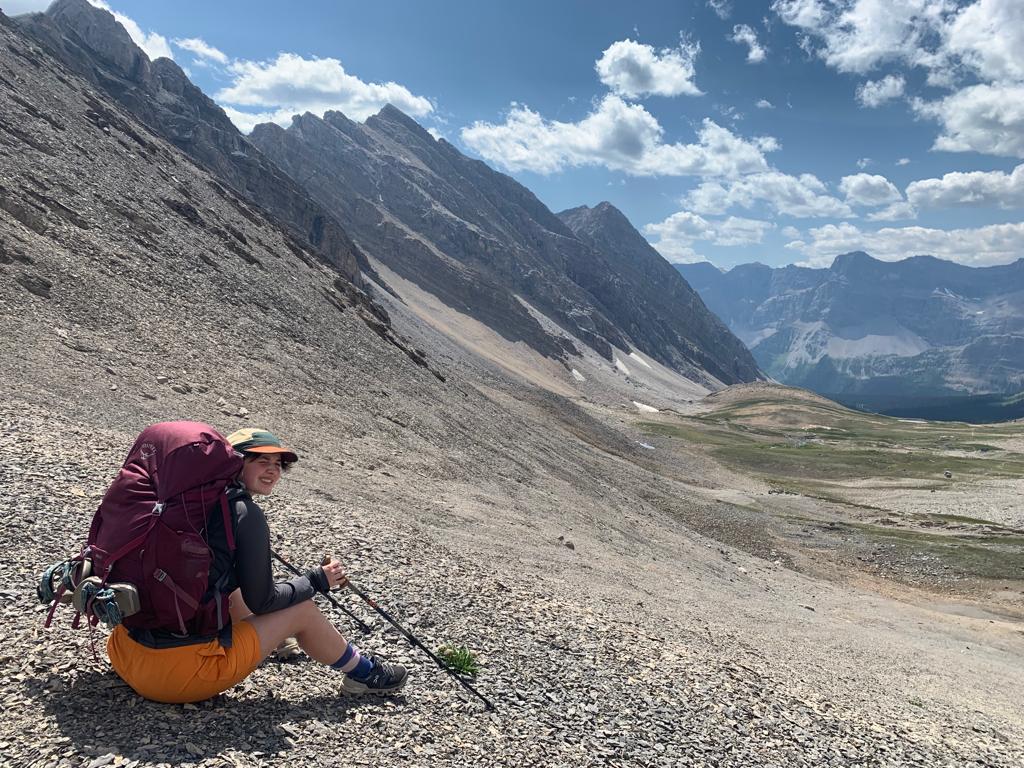
Comparison Baseline
This comparison uses five 2-person backpacking tents: MSR FreeLite 2, NEMO Hornet OSMO 2, Big Agnes Sarvis VST 2, Naturehike Cloud Up EXT 2, and The North Face Stormbreak 2. Packability is estimated against the same 65 L backpack. Where a packed size is listed as a cylinder, the approximate pack volume is calculated from length and diameter.
Weather sources used: Environment and Climate Change Canada daily climate data for Banff CS and NOAA/NCEI Global Historical Climatology Network daily data for Yosemite Park Headquarters. The values below are TrailReady calculations from August daily observations for 2020-2025, not 30-year climate normals. Yosemite Park Headquarters represents lower-elevation Yosemite conditions; higher Yosemite trailheads and camps may be cooler.
| August location baseline | Daily maximum | Daily minimum | Rain / precipitation | Backpacking consequence |
|---|---|---|---|---|
| Banff CS | 23.6°C | 7.3°C | 42.4 mm average monthly precipitation; 10.0 days with precipitation >= 0.2 mm | Cool nights still create condensation risk, and August precipitation remains high enough that rainfly reliability and dry gear separation matter. |
| Yosemite Park Headquarters | 31.9°C / 89.4°F | 14.2°C / 57.6°F | 12.8 mm average monthly precipitation; 3.3 days with precipitation >= 0.2 mm | Hotter, drier August conditions favour low carried weight, strong ventilation, and enough mesh or door area to reduce interior heat and condensation from two sleepers. |
| Tent | Packed weight | Minimum weight | Packed size | Approx. 65 L pack volume |
|---|---|---|---|---|
| MSR FreeLite 2 | 1.06kg | 0.91kg | 46 x 11cm | About 4.4 L |
| NEMO Hornet OSMO 2 | 1.14kg | 948g | 32 x 19cm | About 9.1 L |
| Big Agnes Sarvis VST 2 | 1.27kg | 1.13kg | 45.5 x 11.5cm | About 4.7 L |
| Naturehike Cloud Up EXT 2 | 1.34kg claimed tent weight | 1.34kg | Not listed | Cannot be ranked by pack volume |
| The North Face Stormbreak 2 | 2.67kg | 2.41kg | 56 x 18cm | About 14.3 L |
Retail Availability Links
| Tent | Verified listed price | Primary spec source | Amazon.ca | Amazon.com |
|---|---|---|---|---|
| MSR FreeLite 2 | $589.95 CAD from MEC; USD price not verified | MEC listing | Check Amazon.ca | Check Amazon.com |
| NEMO Hornet OSMO 2 | $599.95 CAD from MEC; USD price not verified | MEC listing | Check Amazon.ca | Check Amazon.com |
| Big Agnes Sarvis VST 2 | $1,049.95 CAD from MEC; USD price not verified | MEC listing | Check Amazon.ca | Check Amazon.com |
| Naturehike Cloud Up EXT 2 | $199.00 USD / $177 CAD from Naturehike | Naturehike listing | Check Amazon.ca | Check Amazon.com |
| The North Face Stormbreak 2 | $310.00 CAD from MEC; USD price not verified | MEC listing | Check Amazon.ca | Check Amazon.com |
What the Measurements Mean on Trail
MSR FreeLite 2 has the lowest packed weight at 1.06kg and occupies about 4.4 L in a 65 L pack. That leaves more internal room for a sleeping bag, pad, food bag, spare layers, and a cook kit. For Banff's 7.3°C average August minimum during 2020-2025, that space matters because a warmer sleep system and dry layers are still relevant.
NEMO Hornet OSMO 2 is only 80g heavier than the FreeLite 2, but its 32 x 19cm packed size takes about 9.1 L. The shorter, wider bundle can be easier to place horizontally, but it uses roughly twice the internal volume of the FreeLite 2. For Yosemite, NPS wilderness rules require approved food storage, and compact shelter volume leaves more room for a bear canister, sun protection, water capacity, and a sleep system appropriate to the chosen elevation.
Big Agnes Sarvis VST 2 weighs 1.27kg and occupies about 4.7 L, close to the FreeLite 2 in pack volume while adding a freestanding structure. Parks Canada says Banff campers use the tent pads provided at designated campgrounds, while Yosemite requires durable campsites such as rock, sand, dirt, or snow. In both parks, a shelter that supports itself before every guyline is tensioned is easier to place accurately on constrained or hard surfaces.
Naturehike Cloud Up EXT 2 has the lowest verified purchase price in this comparison at $199.00 USD or $177 CAD from Naturehike, depending on the currency selected on the manufacturer site. Its published specs include a freestanding structure, 3000mm fly and floor waterproofness, one door, and an included footprint. The missing packed-size and interior-dimension figures limit its comparison: it can be ranked by verified manufacturer price and listed weight, but not by pack volume or liveable space.
The North Face Stormbreak 2 weighs 2.67kg and takes about 14.3 L of pack volume. That is a substantial carried-volume cost in a 65 L backpack, but the tent gives two doors, two 0.91sq. m vestibules, freestanding setup, 3000mm floor waterproofness, and heavier 68-75 denier fabrics. Against Banff's 42.4 mm average August precipitation during 2020-2025 and Yosemite's hotter, drier lower-elevation pattern, those vestibules have a practical job: separating footwear, packs, and damp layers from the sleeping area while limiting interior moisture.
| Tent | Interior space | Weather protection | Setup and ventilation consequence |
|---|---|---|---|
| MSR FreeLite 2 | 2.7sq. m floor; 1m peak; two 0.81sq. m vestibules. | 1200mm fly and 1200mm floor; light 15D fabrics. | Non-freestanding structure saves weight but requires a more reliable anchoring surface. |
| NEMO Hornet OSMO 2 | 2.6sq. m floor; .98m peak; listed vestibules are very small at .07sq. m each. | 1200mm fly and 1500mm floor; light nylon ripstop. | Non-freestanding structure keeps weight down but gives less wet-gear storage than FreeLite or Stormbreak. |
| Big Agnes Sarvis VST 2 | 2.95sq. m floor; 102cm peak; two 0.83sq. m vestibules. | Waterproof ratings not listed; 20D fly and 15D floor. | Freestanding setup improves structural control on Banff tent pads and Yosemite durable surfaces such as rock, sand, or compacted dirt. |
| Naturehike Cloud Up EXT 2 | Interior dimensions not listed. | 3000mm fly and floor; 10D fly and 20D floor. | Freestanding structure and one door reduce setup complexity but create more partner movement conflict than two-door tents. |
| The North Face Stormbreak 2 | 2.84sq. m floor; .95m peak; two 0.91sq. m vestibules. | 1200mm fly and 3000mm floor; heavier polyester fabrics. | Freestanding setup is more tolerant of poor anchoring; heavier fabrics and large vestibules suit wet gear better than long-distance weight targets. |
| Tent | Ventilation and condensation | Ease of setup | Best trail application |
|---|---|---|---|
| MSR FreeLite 2 | Two doors and two vestibules help airflow, create cross-ventilation options, and reduce condensation risk when two sleepers add moisture overnight. | Non-freestanding; needs secure stake placement on tent pads and uneven durable surfaces. | Banff routes where low carried weight and compact packing matter more than setup forgiveness. |
| NEMO Hornet OSMO 2 | Low weight is the main advantage; limited listed vestibule area reduces wet-gear separation and can increase interior moisture transfer from wet clothing. | Non-freestanding; less forgiving on uneven durable surfaces and tent pads. | Dryer, weight-focused itineraries where wet-gear storage is not the deciding factor. |
| Big Agnes Sarvis VST 2 | Two vestibules support gear separation; larger listed floor area helps two sleepers keep bedding away from damp walls and reduce condensation contact. | Freestanding; easier on Banff tent pads and constrained Yosemite durable surfaces. | Banff trips that need low pack volume plus a more tolerant shelter structure. |
| Naturehike Cloud Up EXT 2 | Three mesh windows are listed; one door creates more shared entry traffic in rain and gives partners fewer options to ventilate without disturbing each other. | Freestanding; simpler than non-freestanding tents when stake placement is poor. | Price-sensitive trips where listed rain rating matters and unknown packed dimensions are acceptable. |
| The North Face Stormbreak 2 | Two doors and large vestibules separate wet gear from the sleeping area better than the lighter tents, reducing the amount of moisture introduced into the sleeping compartment. | Freestanding; easiest comparison option for new backpackers on tent pads and uneven durable surfaces. | Banff and Yosemite trips where setup reliability and gear separation matter more than the lowest possible carried weight. |
Packability comparison: In a 65 L backpack, the FreeLite 2 and Sarvis VST 2 use less than 5 L each. The Stormbreak 2 uses about 14.3 L, which can crowd out a bear-resistant food container, extra food for longer itineraries, or a bear canister, extra water capacity, or dry clothing on longer trips.
Banff National Park in August
For Banff in August, TrailReady calculated the 2020-2025 average from Environment and Climate Change Canada daily data for Banff CS. The six August seasons averaged 23.6°C daily maximum, 7.3°C daily minimum, 15.4°C mean temperature, 42.4 mm monthly precipitation, and 10.0 days per August with at least 0.2 mm of precipitation. Parks Canada also warns that mountain weather changes quickly and snow can occur any month of the year, so a Banff tent still needs a reliable waterproof fly, good ventilation, and enough pack efficiency to leave room for dry insulation.
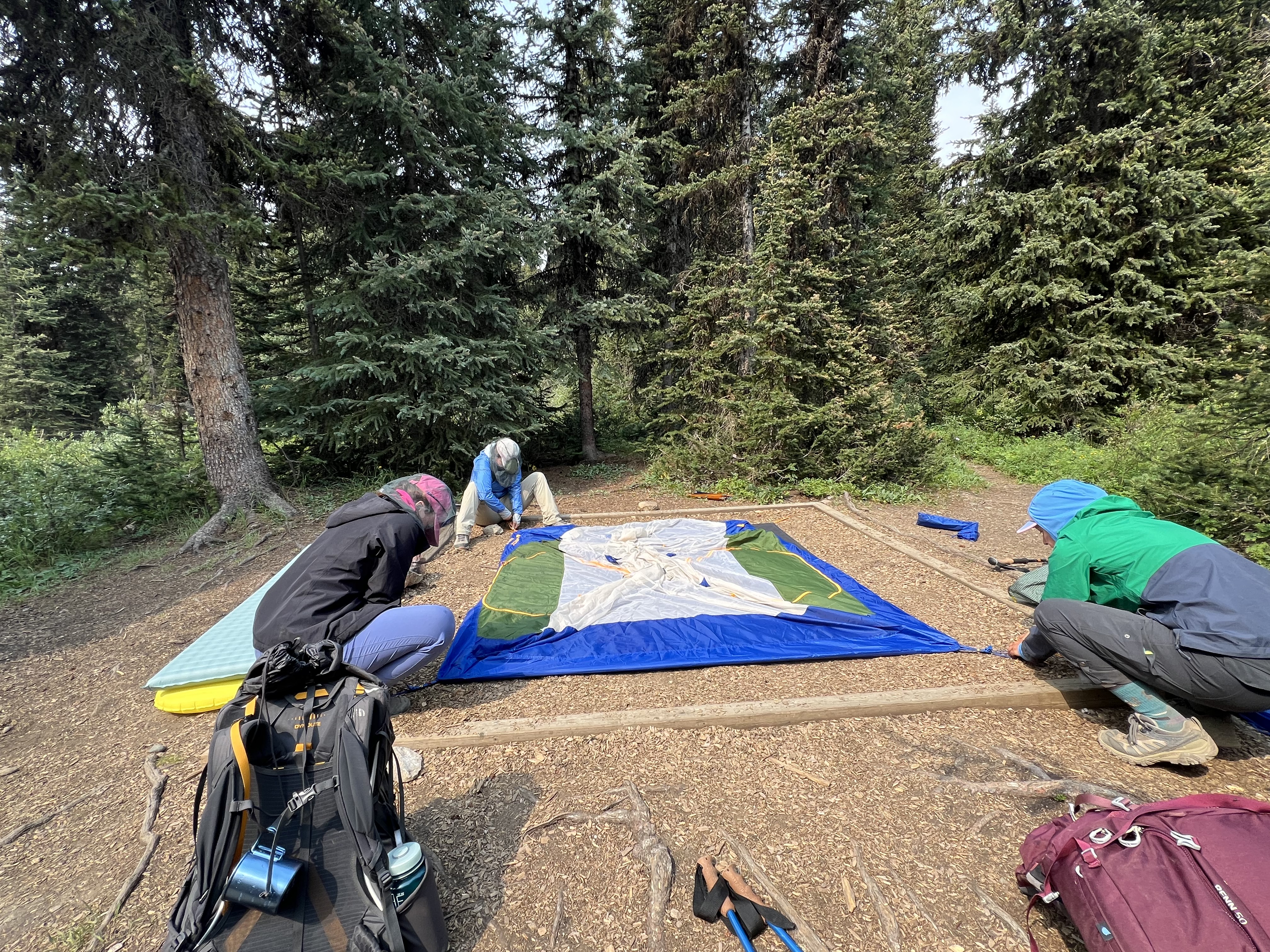
FreeLite 2 has the strongest weight-based case for Banff: 1.06kg and about 4.4 L packed volume leave space for a warmer bag, insulated pad, insulated jacket, and rain shell. Its main limitation is the non-freestanding structure. On designated tent pads, uneven durable surfaces, or hard-packed campsites, a non-freestanding shelter depends on stakes, guylines, or weighted anchors to create interior volume and fabric tension; if the anchor points cannot be placed at the correct angles, the floor plan, vestibules, rainfly spacing, and ventilation geometry can all be compromised.
Sarvis VST 2 gives Banff the better balance of setup confidence and packability. It is 210g heavier than FreeLite 2, but still packs to about 4.7 L and adds a freestanding structure, more floor area, and a taller peak height. The measurable advantage is that it preserves almost the same pack efficiency as FreeLite 2 while reducing dependence on precise stake placement.
Stormbreak 2 is easier to set up but heavy for Banff backpacking. Its 2.67kg packed weight and 14.3 L pack volume make sense only when durability, lower purchase price, and freestanding simplicity matter more than saving 1.40 to 1.61kg over Sarvis VST 2 or FreeLite 2.
Banff design implication: Low weight helps on approaches, but Parks Canada's tent-pad requirement means setup reliability still matters. The best Banff choice should save pack space without making the shelter dependent on precise stake placement.
Yosemite National Park in August
For Yosemite, TrailReady calculated the 2020-2025 August average from NOAA/NCEI daily data for Yosemite Park Headquarters. The available August observations averaged 31.9°C daily maximum, 14.2°C daily minimum, 12.8 mm monthly precipitation, and 3.3 days per August with at least 0.2 mm of precipitation. This station represents lower-elevation Yosemite conditions; higher trailheads and camps may be cooler, so the article does not assign high-country temperatures without a matching five-year station calculation.
FreeLite 2 has the clearest Yosemite argument for experienced backpackers because it is the lightest tent here and occupies only about 4.4 L in a 65 L pack. That leaves more room for the required bear canister, extra water capacity, and sun-protection layers. The limitation is structural: non-freestanding tents need reliable anchors, and Yosemite wilderness rules require camping on durable surfaces rather than vegetation.
Sarvis VST 2 is the stronger balanced option when a freestanding structure is worth 210g over FreeLite 2. Its larger listed floor area helps two sleepers keep bedding away from damp walls, which matters whenever cooler camps, closed vestibules, or limited airflow increase internal condensation.
Stormbreak 2 is more tent than most Yosemite Valley backpackers need in August because precipitation is low and the 14.3 L packed volume competes directly with food storage and water capacity. It remains relevant for beginners who prioritize simple setup and large vestibules over carried weight.
Product Reviews
MSR FreeLite 2
Overview: FreeLite 2 is the lightest tent in the comparison at 1.06kg packed weight and has the smallest calculated pack volume at about 4.4 L. It gives more vestibule storage than Hornet OSMO 2 while keeping a similar low-weight profile.
Strengths: The weight and pack-volume numbers help on Banff approaches and leave more space in a 65 L pack for insulation, food, and rain gear. Two doors reduce partner disturbance compared with Naturehike Cloud Up EXT 2.
Weaknesses: The non-freestanding structure is less forgiving on tent pads, uneven durable surfaces, and hard-packed campsites because it relies on correctly positioned anchors to tension the floor, vestibules, and rainfly. Poor anchoring can reduce usable interior volume, allow fly contact with the inner tent, and limit airflow, which can increase condensation contact during cool Banff nights or Yosemite high-country mornings. The 1200mm fly and floor ratings are lower than Naturehike Cloud Up EXT 2's listed 3000mm ratings.
Most suitable for: Backpackers who want the lowest carried weight and smallest packed volume, especially on Banff routes where pack space is tight.
Comparative limitation: Choose FreeLite 2 over Stormbreak 2 when saving 1.61kg and about 9.9 L of pack volume matters more than freestanding simplicity and heavier fabrics.
NEMO Hornet OSMO 2
Overview: Hornet OSMO 2 is the second-lightest tent at 1.14kg, but its 32 x 19cm packed shape occupies about 9.1 L, more than FreeLite 2 or Sarvis VST 2.
Strengths: Its low weight works for Banff itineraries where elevation gain and long walking days matter. The 1500mm floor rating is higher than FreeLite 2's listed floor rating.
Weaknesses: The listed vestibules are only .07sq. m each, which limits wet-gear separation and gives two occupants fewer places to keep damp items outside the sleeping area. It is also non-freestanding, so setup is less forgiving on constrained or uneven durable surfaces.
Most suitable for: Hikers who want a very light 2-person shelter and do not need large vestibules for soaked footwear, rain pants, or pack covers.
Comparative limitation: Hornet OSMO 2 competes with FreeLite 2 on weight, but FreeLite 2 has a smaller calculated pack volume and much larger listed vestibules.
Big Agnes Sarvis VST 2
Overview: Sarvis VST 2 combines a 1.27kg packed weight, about 4.7 L pack volume, freestanding setup, 2.95sq. m floor area, 102cm peak height, and two 0.83sq. m vestibules.
Strengths: It compares well for Banff because it keeps pack volume close to FreeLite 2 while improving setup reliability on designated tent pads. It also gives more listed floor area than FreeLite 2, Hornet OSMO 2, and Stormbreak 2.
Weaknesses: Its purchase price is the highest in this comparison, and waterproof ratings are not listed. For Banff, that missing rain-performance number matters because the 2020-2025 August daily record averaged 42.4 mm of monthly precipitation. For Yosemite Park Headquarters, it matters less than ventilation because the same five-year window averaged 12.8 mm of monthly August precipitation.
Most suitable for: Backpackers who want Banff-friendly packability with the setup advantage of a freestanding structure.
Comparative limitation: Sarvis VST 2 costs more than the other tents, but it is the strongest middle ground between low pack volume and freestanding setup.
Naturehike Cloud Up EXT 2
Overview: Cloud Up EXT 2 has the lowest verified purchase price in this comparison at $199.00 USD or $177 CAD from Naturehike, depending on the currency selected on the manufacturer site. It has a claimed tent weight of 1.34kg and lists a freestanding structure, 3000mm fly and floor waterproofness, 10D fly, 20D floor, and one door.
Strengths: The price-to-weight ratio is the main measurable advantage. The listed 3000mm waterproofness is higher than the MSR, NEMO, and Stormbreak fly ratings in this comparison.
Weaknesses: Packed size, interior dimensions, floor area, peak height, and vestibule area are not listed here, so it cannot be ranked for pack volume or living space. One door is less convenient than the two-door layouts because partners have fewer entry and ventilation options, especially when damp clothing or overnight condensation is present.
Most suitable for: Hikers who prioritize purchase price and listed waterproofness over fully comparable packability and interior-space measurements.
Comparative limitation: Cloud Up EXT 2 is most suitable for hikers prioritizing purchase price and listed rain rating, while accepting less measurable information for packability and interior space.
The North Face Stormbreak 2
Overview: Stormbreak 2 is the heaviest and bulkiest tent here at 2.67kg and about 14.3 L of pack volume, but it has two doors, two 0.91sq. m vestibules, freestanding setup, and heavier fabrics.
Strengths: The freestanding structure, large vestibules, and 3000mm floor rating make it the most practical comparison tent when setup reliability, wet-gear separation, and durability matter more than low carried weight.
Weaknesses: Its weight is 1.61kg higher than FreeLite 2 and 1.40kg higher than Sarvis VST 2. In a 65 L backpack, its 14.3 L packed volume can displace food, insulation, or a bear-resistant container.
Most suitable for: First-time backpackers in Banff or Yosemite who need easier setup and gear separation more than low carried weight.
Comparative limitation: Stormbreak 2 is most suitable for first-time backpackers or weather-exposed trips where setup reliability and storage matter more than low carried weight.
Final Recommendations
Best Overall for Banff National Park
Big Agnes Sarvis VST 2. It carries only 210g more than FreeLite 2, packs to about 4.7 L, provides the largest listed floor area at 2.95sq. m, has the tallest listed peak height at 102cm, and uses a freestanding structure on tent pads. Those measurements match Banff's 2020-2025 August pattern: 23.6°C average daily maximum, 7.3°C average daily minimum, and 42.4 mm average monthly precipitation.
Best Overall for Yosemite National Park
MSR FreeLite 2. Yosemite Park Headquarters averaged 31.9°C daily maximum, 14.2°C daily minimum, and 12.8 mm monthly precipitation in August 2020-2025, which favours a light, compact, well-ventilated shelter over a heavier rain-oriented tent. FreeLite 2 weighs 1.06kg, occupies about 4.4 L in a 65 L pack, and has two doors and two vestibules for airflow and partner access. Its non-freestanding structure still requires careful anchoring on durable surfaces.
Best Choice for Lowest Pack Weight
MSR FreeLite 2. At 1.06kg packed weight, it is 80g lighter than Hornet OSMO 2, 210g lighter than Sarvis VST 2, and 1.61kg lighter than Stormbreak 2. That weight savings matters most when the same pack also needs food, rainwear, and insulation for Banff's 7.3°C average August minimum during 2020-2025.
Best Choice for Smallest Packed Size
MSR FreeLite 2. Its 46 x 11cm packed size occupies about 4.4 L inside a 65 L backpack, slightly less than Sarvis VST 2 and far less than Stormbreak 2. That leaves more room for food, sleep insulation, clothing, and cookware.
Best Choice for First-Time Backpackers
The North Face Stormbreak 2. A first-time backpacker benefits from a freestanding structure, two doors, large vestibules, and more durable fabrics. The pack-weight cost is substantial, but setup reliability reduces campsite stress on Banff tent pads and Yosemite durable surfaces.
Related TrailReady Guides
These TrailReady guides can help with the other bulky and weather-sensitive parts of your shelter and sleep system:
- How to Choose a Sleeping Bag for Backpacking
- Bear Safety for Backpacking in Canada
- How to Store a Backpacking Water Filter Between Seasons
- How TrailReady Gear Recommendations Are Made
FAQ
Which 2-person tent is strongest for Banff in August?
Big Agnes Sarvis VST 2 is the strongest match for Banff among the compared tents because it combines low packed volume, freestanding setup, 2.95sq. m of floor area, 102cm peak height, and two 0.83sq. m vestibules while preserving pack room for dry insulation needed around a 7.3°C average August minimum in the 2020-2025 daily record.
Which 2-person tent is strongest for Yosemite in August?
MSR FreeLite 2 is the strongest match for Yosemite when low carried weight and compact packing are priorities because Yosemite Park Headquarters averaged 31.9°C daily maximum and 12.8 mm monthly precipitation in August 2020-2025. Its ventilation and low weight are useful, but the non-freestanding structure requires careful anchoring on durable surfaces.
Which tent uses the least pack space?
MSR FreeLite 2 occupies about 4.4 L inside a 65 L backpack from its 46 x 11cm packed size, narrowly ahead of Big Agnes Sarvis VST 2 at about 4.7 L.
Which tent has the lowest packed weight?
MSR FreeLite 2 has the lowest packed weight at 1.06kg, followed by NEMO Hornet OSMO 2 at 1.14kg and Big Agnes Sarvis VST 2 at 1.27kg.
Which tent is easier for first-time backpackers to set up?
The North Face Stormbreak 2 is the easiest comparison choice for first-time backpackers because its freestanding structure is more forgiving on tent pads, uneven durable surfaces, and compacted campsites than non-freestanding shelters.
How TrailReady Helps
TrailReady helps backpackers match tent choices to destination, season, weather, trip length, group size, and pack capacity. A 2-person tent affects carried weight, packed volume, comfort, and how the group divides shared gear.
Use TrailReady to plan your next backpacking trip and build a gear list based on your route, season, trip length, and expected conditions.
References
- REI Co-op. Backpacking Tents: How to Choose.
- Environment and Climate Change Canada. Daily climate data: Banff CS, Climate ID 3050519.
- NOAA/NCEI. Global Historical Climatology Network Daily: Yosemite Park Headquarters, USC00049855.
- Parks Canada. Backcountry camping: Banff National Park.
- National Park Service. Yosemite Wilderness Regulations.
- MEC. The North Face Stormbreak 2-Person Tent.
- MEC. MSR FreeLite 2-Person Tent.
- MEC. NEMO Hornet OSMO 2-Person Tent.
- MEC. Big Agnes Sarvis VST 2-Person Tent.
- Naturehike. Cloud Up EXT 2-Person Ultralight Backpacking Tent.
Plan your next backpacking trip with TrailReady.