A backpacking tent should be light enough to carry comfortably but strong enough for the trip. For most backpackers, the useful question is not only total tent weight. It is how much tent weight each person carries, how much pack space the tent uses, and what protection the group gets for that weight.
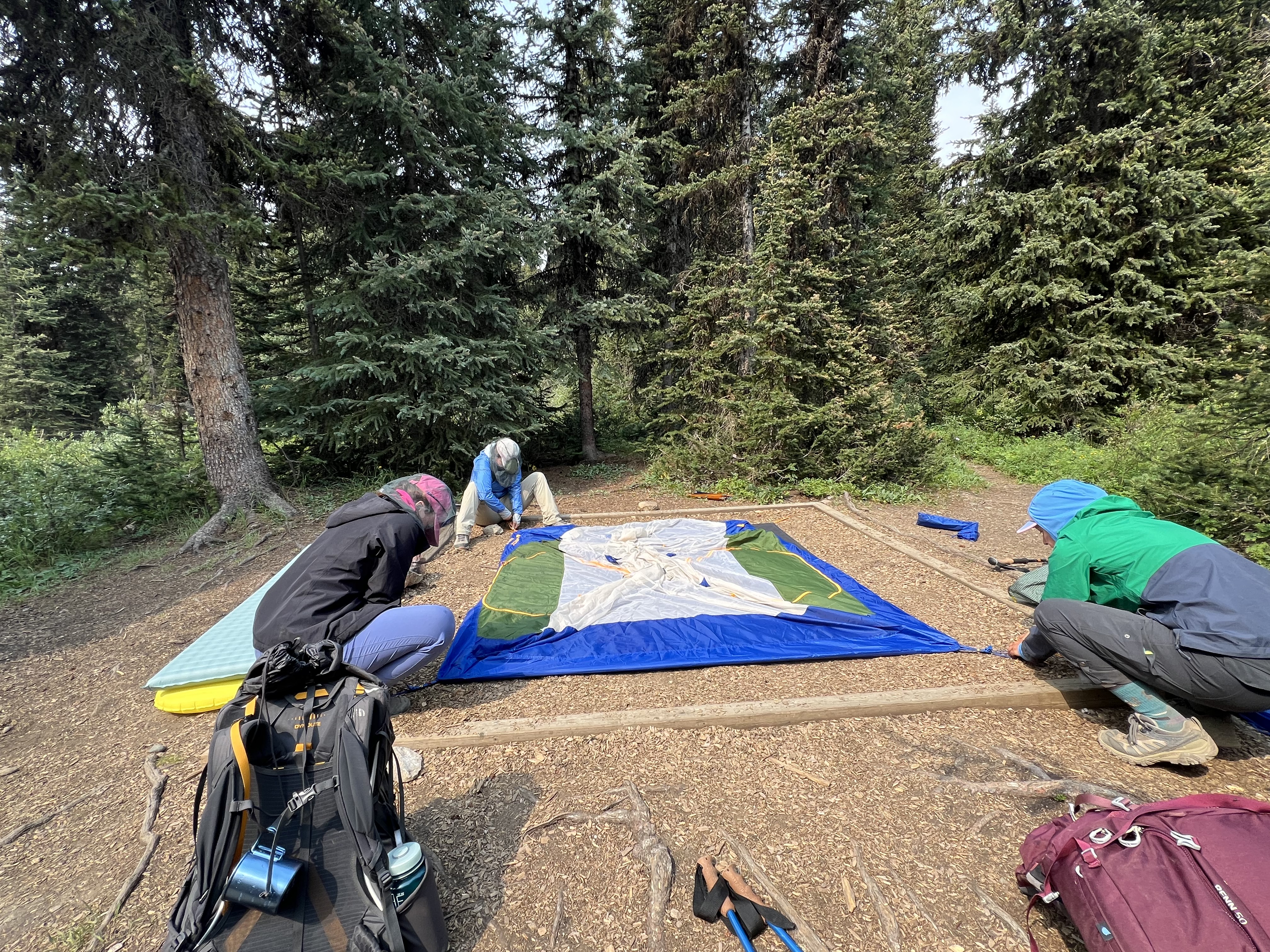
Quick Weight Targets
The weight categories below come from How TrailReady Gear Recommendations Are Made. TrailReady uses community guidelines for ultralight, lightweight, and traditional tent-weight categories. These are practical backpacking benchmarks based on common manufacturer specifications and gear-list practice, not legal industry standards. In this guide, anything above the lightweight benchmark is considered too heavy unless there is a clear reason, such as winter use, rough campsites, stronger fabric, larger vestibules, or lower price.
| Tent Capacity | Ultralight | Lightweight | Too Heavy in This Guide |
|---|---|---|---|
| 1-person | Under 0.68 kg | 0.68-1.13 kg | Over 1.13 kg |
| 2-person | Under 0.91 kg | 0.91-1.47 kg | Over 1.47 kg |
| 3-person | Under 1.36 kg | 1.36-1.93 kg | Over 1.93 kg |
| 4-person | Under 1.93 kg | 1.93-2.61 kg | Over 2.61 kg |
Use packed weight for planning. Packed weight is usually closer to what goes in the backpack. Minimum weight can exclude stakes, stuff sacks, repair sleeves, or small accessories.
Why Tent Weight Matters Most for Solo Trips
Tent weight is especially relevant for a solo backpacker on a multi-day trip because there is no second person to share the poles, fly, inner tent, stakes, or stuff sack. If a solo backpacker carries a 2.33 kg tent, the full 2.33 kg stays in one pack. If two backpackers share a 1.54 kg tent, each person carries about 0.77 kg of tent weight.
For a 3-day solo backpacking trip, a practical starting pack target is about 10-14 kg before carried water. Food is usually about 2.1-3.0 kg for three days, depending on calories and food choices. Gear usually makes up the rest: backpack, tent, sleep system, stove, clothing, water treatment, safety gear, and small essentials. At the start of the trip, food is often the heaviest category that changes during the trip. Among fixed gear, the backpack, tent, and sleeping bag are often the heaviest individual items.
Weight Per Person Matters More Than Tent Weight Alone
A 2.2 kg 2-person tent sounds heavy until it is divided between two people. Each person carries about 1.1 kg. A 2.7 kg 3-person tent can be easier to justify when three people share it because the per-person tent weight drops to about 0.9 kg.
This is why group tents can be efficient. One larger tent often weighs less than two smaller tents with separate poles, rainflies, stakes, and stuff sacks. The trade-off is flexibility: if the group separates, the tent system may no longer divide cleanly.
Framed, Semi-Freestanding, and Frameless Tents
A freestanding or semi-freestanding tent carries its own pole structure. That frame adds weight, but it usually makes setup easier on tent pads, hard-packed ground, and uneven campsites. A frameless or trekking-pole tent can be lighter because it does not carry a dedicated frame. The trade-off is setup: it usually needs careful staking, correct tension, and suitable ground. On wooden tent pads, rocky campsites, sand, or very hard soil, that can be less forgiving.
| Tent Type | Typical Weight Reason | Setup Consequence |
|---|---|---|
| Freestanding | Dedicated pole structure adds weight. | Usually easier to place before staking. |
| Semi-freestanding | Uses fewer poles than a fully freestanding tent. | Needs some staking for full floor shape and vestibule function. |
| Frameless or trekking-pole supported | No dedicated frame, so the tent can be lighter. | More dependent on stakes, tension, and campsite surface. |
1-Person Example: MSR FreeLite 1 vs MSR Elixir 1
MSR FreeLite 1-Person Tent: 0.89 kg packed weight, 0.74 kg minimum weight, 46 x 10 cm packed size, 15-denier nylon ripstop canopy, 15-denier nylon ripstop floor, 15-denier nylon ripstop fly, 1200 mm floor waterproofness, 1200 mm fly waterproofness, Easton Syclone pole, one vestibule, and non-freestanding setup. Based on the 1-person benchmark, it is lightweight because it sits between 0.68 and 1.13 kg.
MSR Elixir 1-Person Tent: 2.33 kg packed weight, 1.84 kg minimum weight, 48 x 13 cm packed size, 40-denier polyester ripstop canopy, 75-denier polyester floor, 75-denier polyester ripstop fly, 3000 mm floor waterproofness, 1500 mm fly waterproofness, 7000-series aluminum pole, included footprint, one vestibule, and freestanding setup. Based on the 1-person benchmark, it is too heavy for this guide because it is above 1.13 kg.
The Elixir's extra weight comes from heavier fabrics, a stronger floor, higher floor waterproofness, freestanding pole structure, and included footprint. Those features can make sense for durability and easier setup, but the solo backpacker carries the full 2.33 kg. Compared with the FreeLite 1, the Elixir adds 1.44 kg to one person's pack.
2-Person Example: MSR Hubba Hubba LT 2 vs NEMO Kunai 2
MSR Hubba Hubba LT 2-Person Tent: 1.54 kg packed weight, 1.36 kg minimum weight, 51 x 14 cm packed size, 20-denier canopy, 20-denier floor, 20-denier fly, 1800 mm floor and fly waterproofness, two doors, two vestibules, and freestanding setup. Based on the 2-person benchmark, it is too heavy by the strict TrailReady cutoff because it is above 1.47 kg, but it is only 70 g above the lightweight range.
NEMO Kunai 2-Person Tent: 2.2 kg packed weight, 1.8 kg minimum weight, 18 x 28 cm packed size, 20-denier nylon ripstop canopy, 30-denier nylon ripstop floor, 15-denier nylon ripstop fly, 3000 mm floor waterproofness, 1200 mm fly waterproofness, DAC Featherlite NSL TH72M aluminum pole, one door, one vestibule, and 4-season design. Based on the 2-person benchmark, it is too heavy for this guide because it is above 1.47 kg.
The Kunai's weight comes from its 4-season design, stronger floor fabric, higher floor waterproofness, and more weather-focused structure. The Hubba Hubba LT 2 is lighter because it is a 3-season tent with lighter fabrics and a more weight-focused design. For one person traveling alone with a 2-person tent, the full tent weight stays in one pack. A solo backpacker carrying the Hubba Hubba LT 2 carries 1.54 kg of tent weight; carrying the Kunai 2 means 2.2 kg of tent weight.
For two people traveling together, the tent weight can be split. The Hubba Hubba LT 2 becomes about 0.77 kg per person. The Kunai 2 becomes about 1.1 kg per person. On a 3-day trip, that shared tent weight usually makes the total pack more manageable than carrying the same 2-person tent alone.
| 3-Day Scenario | Tent Weight in Each Pack | Food Contribution | Practical Pack Target Before Water |
|---|---|---|---|
| Solo backpacker with Hubba Hubba LT 2 | 1.54 kg | About 2.1-3.0 kg | About 10-14 kg |
| Solo backpacker with Kunai 2 | 2.2 kg | About 2.1-3.0 kg | About 11-15 kg |
| Two backpackers sharing Hubba Hubba LT 2 | About 0.77 kg each | About 2.1-3.0 kg each | About 9-13 kg each |
| Two backpackers sharing Kunai 2 | About 1.1 kg each | About 2.1-3.0 kg each | About 10-14 kg each |
When a Heavier Tent Makes Sense
A heavier tent can be the better choice when the route is wet, windy, exposed, or rough on gear. Extra weight may buy more durable floor fabric, stronger pole geometry, larger vestibules, better separation between wet gear and sleeping bags, or easier setup on tent pads and hard-packed campsites.
For rainy routes, vestibule space matters almost as much as sleeping area. Wet boots, rain jackets, and packs need a covered place outside the inner tent. If that gear comes inside, condensation and damp fabric contact become harder to manage.
When a Lighter Tent Makes Sense
A lighter tent makes sense when the route has long climbs, high mileage, reliable campsites, and moderate weather. Saving 500 g to 1 kg from the tent can make a real difference, especially when food and water weight are already high.
The lighter tent still needs enough space and weather protection for the trip. If a tent is light because it has very small vestibules, thin floor fabric, or a less forgiving setup, the weight savings may not be worth it for wet or exposed trips.
What to Check Before Choosing by Weight
Packed Weight
Use the weight that includes the parts you plan to carry.
Floor Area
Check whether sleeping pads and bags fit without touching damp walls.
Vestibules
Look for enough covered space for wet boots, packs, and rainwear.
Packed Size
Confirm the tent fits inside or outside your backpack without crowding food and clothing.
How Heavy Is Too Heavy?
Using the TrailReady benchmark table, a tent is too heavy when it is above the lightweight range for its capacity. That means over 1.13 kg for a 1-person tent, over 1.47 kg for a 2-person tent, over 1.93 kg for a 3-person tent, and over 2.61 kg for a 4-person tent.
That does not mean every heavier tent is wrong. It means the extra weight needs a factual reason. Clear reasons include very low price, frequent use on rough campsites, stronger rain protection, stronger floor fabric, winter use, larger vestibules, or a group that prefers comfort over low weight. Without one of those reasons, the weight may be better spent on food, water, insulation, or safety gear.
Related TrailReady Guides
Use these guides when comparing tent weight against real trips, pack capacity, weather, food, water, sleep systems, and safety requirements.
- 3-Day Backpacking Gear List for Banff in August
- 8-Day West Coast Trail Backpacking List
- 50L-65L Backpacking Backpack Guide
- 2-Person Backpacking Tent Comparison
- 3-Person Backpacking Tent Comparison
- Choosing a Sleeping Bag for Backpacking
- Sleeping Bags for Tall People
- Double Sleeping Bags for Backpacking
- Double Sleeping Pads for Backpacking
- Ultralight Sleeping Pads for Wind River Range in August
- Ultralight Sleeping Pads for La Cloche in August
- 3-Night Banff Backpacking Menu
- Water Filter Storage and Maintenance
- Bear Safety for Backpacking in Canada
- Mosquito Protection in Banff and Jasper
- Backpacking in Continuous Rain
- Blister and Chafing Prevention
FAQ
What is a good tent weight for backpacking?
Based on the TrailReady benchmark table, lightweight means 0.68-1.13 kg for a 1-person tent, 0.91-1.47 kg for a 2-person tent, and 1.36-1.93 kg for a 3-person tent. Anything above that range is treated as too heavy in this guide unless there is a clear reason for the extra weight.
Should I use packed weight or minimum weight?
Use packed weight for trip planning. It is closer to the weight that actually goes into the backpack. Minimum weight can be useful for comparing tent bodies and poles, but it may leave out small items you still need.
Is a heavier tent safer?
Not automatically. A heavier tent may use thicker fabric or stronger poles, but safety also depends on setup, site choice, weather, ventilation, and whether the tent is appropriate for the season.
Is a 3-person tent too heavy for two people?
Not always. A 3-person tent can be reasonable for two people when they need more room for wet gear, wide sleeping pads, or long bad-weather periods. The extra weight should be compared against the extra usable space.
How TrailReady Helps
TrailReady starts with the trip requirements before making recommendations. Instead of ranking tents by weight alone, it first looks at destination, weather, season, trip duration, group size, pack capacity, food volume, water needs, and park-specific requirements. Tent weight is then evaluated as one part of the full backpacking system.
Use TrailReady to plan your next backpacking trip and build a gear list based on your route, season, trip length, and expected conditions.
References
- How TrailReady Gear Recommendations Are Made
- TrailReady 2-Person Backpacking Tent Comparison
- TrailReady 3-Person Backpacking Tent Comparison
- MEC: MSR FreeLite 1-Person Tent
- MEC: MSR Elixir 1-Person Tent
- MEC: MSR Hubba Hubba LT 2-Person Tent
- MEC: NEMO Kunai 2-Person Tent
Plan your next backpacking trip with TrailReady.